Sustainability
Why Incentives - Not Pressure - Will Unlock SME Action on Scope 3
Most Scope 3 programmes are built around reporting pressure. Partners are asked to complete spreadsheets, respond to questionnaires, or submit emissions data to meet procurement requirements.
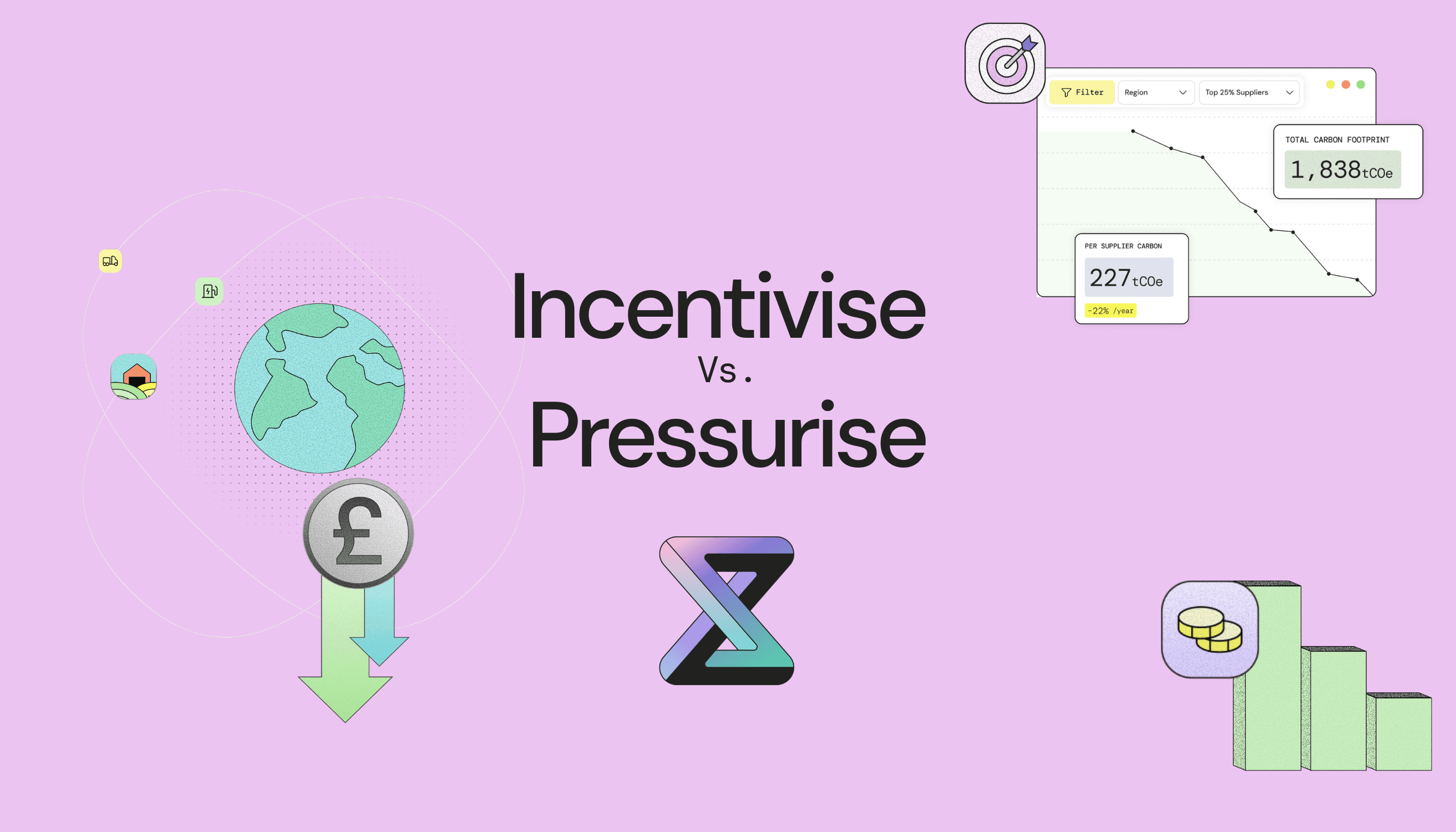
For the organisations requesting that information, the motivation is clear: they need credible value-chain data to support compliance reporting, procurement decisions, and climate commitments.
But for the small businesses that make up most value chains, that approach rarely works. SMEs don’t change behaviour because they’re asked to report emissions. They change behaviour when climate action creates clear business value.
The SME reality
For most organisations, 70–90% of total emissions sit in the value chain, and CDP data suggests supply-chain emissions can be more than 11 times larger than operational emissions. This means real progress on climate targets depends heavily on engaging suppliers.
And those suppliers are overwhelmingly small businesses.
The UK has around 5.5 million SMEs, and together they produce roughly 37% of the nation’s greenhouse gas emissions. So if large organisations want to make real progress on Scope 3, they have to bring SMEs with them.
Most SMEs don’t have sustainability teams. Many have never measured emissions before. And the majority are already stretched running their businesses.
Research shows:
Only 15% of SMEs have measured their carbon footprint
Just 26% say they have the knowledge to transition to net zero
Only 14% feel they have the time to engage with it
Against that backdrop, it’s not surprising that supplier reporting programmes often struggle.
Pressure doesn’t drive meaningful engagement
Many value chain climate programmes rely on pressure.
Suppliers are asked to respond because of:
procurement requirements
sustainability scorecards
contractual obligations.
But pressure alone rarely creates meaningful engagement.
For small businesses already facing time and resource constraints, reporting requests can feel like another administrative burden — especially when the benefit to them is unclear. There are several reasons for this.
First, emissions reporting rarely sits near the top of an SME’s priority list. Owners are focused on winning work, managing costs, and keeping the business running.
Second, reporting processes are often complex. Spreadsheets, questionnaires, and unfamiliar carbon terminology can make the task time-consuming and confusing.
Third, the pressure itself is often limited. In many value chains the penalties for non-reporting are weak or inconsistently applied, particularly when partners are operationally critical or difficult to replace.
Pressure may produce data, but it rarely produces engagement or action.
Incentives unlock action
What changes behaviour is value.
When climate action helps a business reduce costs, win work, or strengthen customer relationships, engagement increases dramatically.
For many SMEs the strongest motivator is simple: saving money.
Lower energy use, reduced waste and operational efficiencies can deliver real financial benefits. Research from the Federation of Small Businesses shows lower energy bills are one of the strongest incentives for SMEs to invest in sustainability, with 61 per cent of small firms saying it would increase their appetite for low-carbon improvements.
But value chain owners also have another lever they can play, that is often overlooked.
Commercial incentives. These can include:
preferential supplier status
longer-term contracts
faster payment terms
improved pricing or volume commitments
access to new opportunities
When sustainability becomes linked to commercial advantage, participation stops feeling like a compliance exercise and starts becoming a competitive opportunity.
Make engagement simple
Even with incentives, participation still depends on simplicity.
If suppliers are expected to navigate complex reporting frameworks on their own, engagement will remain low.
Technology is starting to change that.
Digital platforms can:
automate the capture of core emissions data
guide suppliers through the process step by step
highlight practical actions that reduce emissions and costs
share structured data upstream automatically.
Instead of sending partners a spreadsheet and hoping for the best, the process becomes guided, simple and repeatable.
Digital platforms are starting to change this dynamic — helping SMEs capture core emissions data quickly while identifying practical actions that can reduce costs and build capability over time.
Beyond reporting: sustaining change
Capturing emissions data is only the first step. Many value chain programmes stall after the initial audit because partners are left asking the same question: what happens next?
This is where ongoing support becomes critical. Emissions platforms like Zellar go beyond measurement and reporting by coaching SMEs at a site level and guiding suppliers through practical improvements over time — from reducing energy use and switching suppliers to embedding better operational habits across the business.
Instead of treating sustainability as a compliance exercise, the focus can shift to incentivising continuous improvement. That deeper engagement not only improves data quality in future years, it also helps suppliers deliver the real emissions reductions and companies are ultimately looking for.
The real question for Scope 3
The uncomfortable truth is that most Scope 3 programmes are designed around reporting pressure, not supplier engagement.
They are also often built around enterprise-level tools and processes that assume suppliers have sustainability teams, carbon specialists, and time to complete complex reporting frameworks.
But small businesses don’t change behaviour because they are asked to fill in a spreadsheet.
They change behaviour when sustainability:
saves money
creates opportunity
or strengthens their relationship with customers
If value chains want real progress on Scope 3, the question isn’t:
“How do we get SME partners to report emissions?”
It’s:
“How do we make climate action valuable for them?”
Share article: